Thursday, 27 February 2014
Halfway Novel Blog Post
6. Opinion of Character's Reaction
Strangling and contorting his insides, this restless buildup of emotions enlarges with every preceding action distancing this Pashtun fom his former friend. His constant companion and shadow, Hassan, offers his undying loyalty; however, Amir cannot reciprocate as he painfully spectates the grueling rape of his servant who desperately clings onto the battered kite he promised to retrieve.
A glance into the victim's eyes sends Amir frantically scurrying. The mortal dismay of witnessing this event would also cause my limbs to freeze on the spot, and I too would not possess the courage to break the banter out of selfish fear for my own being. Amir's rapid departure is triggered by the concern for himself if he intervenes, but also the dire need to finally please the unwavering Baba with the prized kite, which will only be destroyed by Assef if he attempts to retrieve it. Although his actions are unworthy, the reasoning is legitimate, for humans often seek to satisfy themselves before others. By sacrificing Hassan, Amir will not only be unharmed, but he can finally pride his father in being the winner trophy son that follows the footstep of the successful Baba.
If I were Amir, I would consult Hassan and beg for forgiveness after the initial shock with the conscience that I need to pay for my pound of flesh, but nevertheless, I would be forever in his debt for abandoning him on his conquest to fulfill a task for me. Unlike Amir, the guilt would overwhelm me and I would later confess my actions instead of persistently attempting to evade my troubles, knowing it would only cause more havoc. However, upon noticing Hassan's allegiance despite the neglect, I too would also be sickened by his commitment. I could not bear to halfheartedly devote myself to Hassan where "everywhere I turned,"(94) I would be burdened with his "unwavering loyalty"(94) that serves as a constant reminder of my cruel self, but also inflicting a sorrowful hatred for his vulnerability in so easily forgiving someone who has caused so much suffering.
1.Setting of novel
The devastating effects of the Soviet Invasion of 1979 forced Amir and countless Afghans to flee from their homeland, Kabul, to safer foreign countries like the United States, and with the change of setting, the novel highlights the vast differences of culture and way of living. With their departure, Amir and Baba abandoned their life of wealth. America welcomed these Pashtuns with open arms embracing them with the opportunity to reincarnate into the filter feeds of the nation, scavenging for the lowliest of jobs, creating a mockery of their previous fortunes and disdaining their past reputation.
In the Middle-East, Baba drove a flashy "ford black mustang that drew envious looks"(4.10) but is replaced with a "dilapidated 71 Volkswagen bus" (147) purchased at a steal of only five-hundred fifty dollars to carry misfit garage sale goods to sell at the flea market. The once prosperous businessman, now a gas pumper, frequents the market for groceries which was normally done by his servants Ali and Hassan. Although his opulence is disintegrated, his pride never falters. This typical Afghan pride symbolizes the manhood that he protects, which is the reason why Baba is ridiculed at the notion of accepting food stamps, for he does not accept the "free money"(138) that is not earned through deserving labor. In Amir's eyes, "real men (like Baba) play soccer"(21) but he fails as a "blundering liability"(21) on the field.
Men of Afghanistan are neither poets nor writers, but in America there is no right or wrong regarding jobs and Baba finally accepts Amir's passion for literature even boasting "Amir is going to be a great writer."(147) However, weakness and vulnerability is never to be surfaced in Afghanistan or in America. Throughout the course of cancer, Baba never talks of his illness for he doesn't want "anybody's sympathy"(166) which is an example of the stubbornness a man's pride can cause. Miles away from Kabul, America acts as the catalyst of change with it's new customs.

An Abridged Arbitrary
 This thrilling tale of Afghan culture by Khaled Hosseini has offered the world an eye-opening perspective of real life struggles concerning both religion and politics. The Kite Runner was published by Riverhead Books on May 29, 2003. With dire cruelty and heartfelt redemption, this three-hundred ninety four page novel is loosely based on the author's personal experience which is relived by the adolescent narrator, Amir, who flees to the United States after the Soviet war in Afghanistan of 1979. Wealthy, privileged and fortunate Amir is best friends with Hassan, his classless servant. Strained by the "ethnic, religious, and political tensions" of the current monarchy, Amir neglects the tight-knit friendship and selfishly abandons the impoverished Hassan with his crippled father in the hands of the Soviets. Long after his departure, the protagonist returns to his childhood home in attempt to mend his wrongdoings. Despite the ongoing conflicts in Afghanistan, the true issue revolves around the personal struggle with Amir and the fragile friendship that he desperately seeks to rekindle and rejuvenate.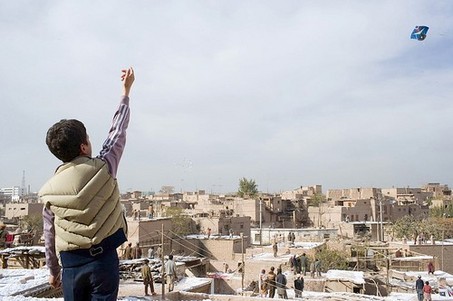
"intimate narrative of love, betrayal and reconcilliation" -The Globe and MailAlthough this novel is assigned, I am genuinely apprehensive to discovering the life within the bustling dirt roads of the capital Kabul through Amir's eyes and witnessing the growth of his friendship with Hassan.
Subscribe to:
Comments (Atom)